%402x.svg)
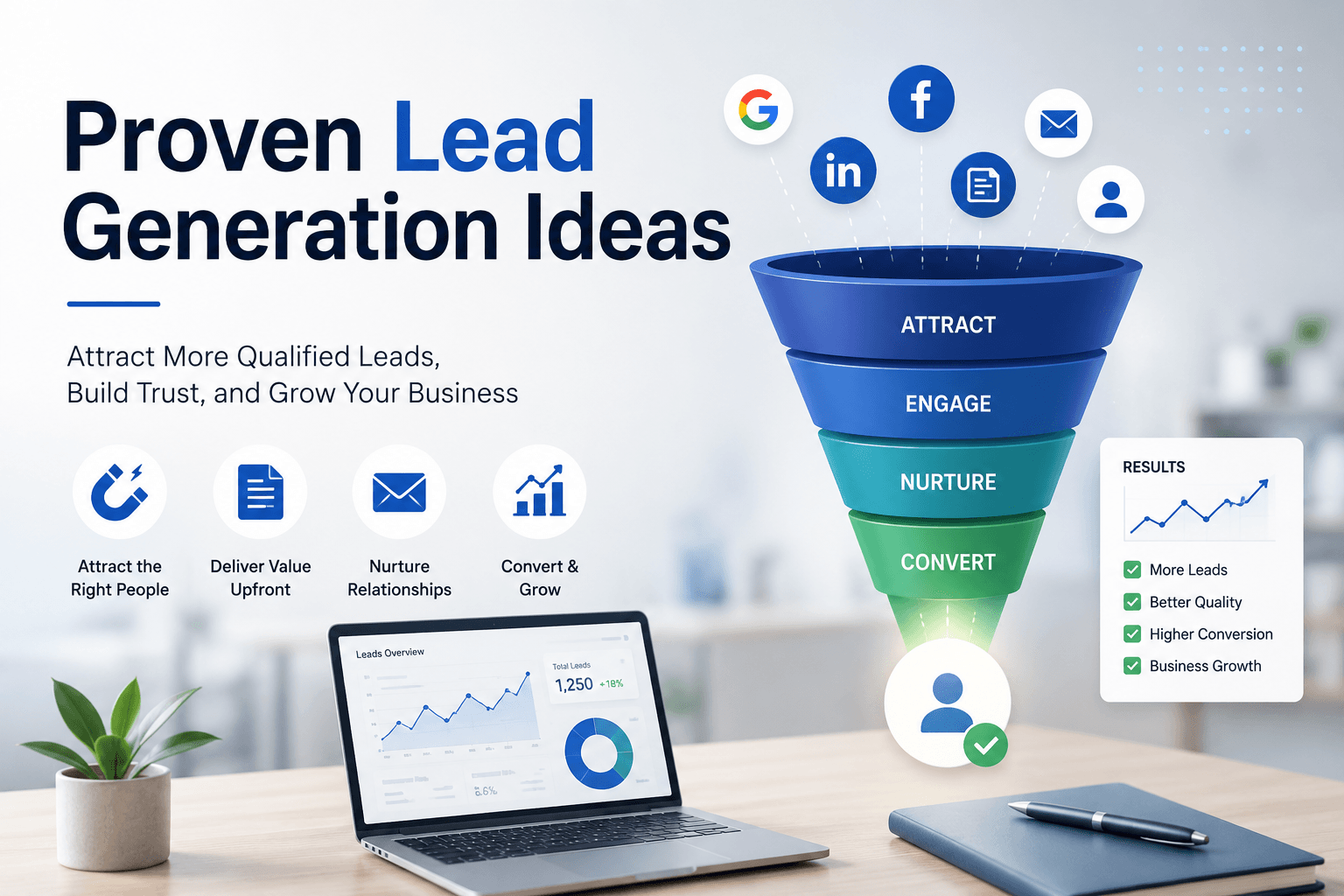
Lead Generation Ideas: Proven Strategies for More Quality Leads
Getting quality leads is one of the biggest challenges businesses face today. Almost half of all companies struggle to generate enough leads to meet their goals. The good news is that lead generation doesn't have to feel impossible or require constant cold calling to work.
Getting quality leads is one of the biggest challenges businesses face today. Almost half of all companies struggle to generate enough leads to meet their goals. The good news is that lead generation doesn't have to feel impossible or require constant cold calling to work.
The most successful lead generation ideas focus on offering real value upfront rather than pushing products, which helps you attract qualified leads who are already interested in what you do. When you create content that solves problems, answers questions, or makes someone's work easier, you naturally improve your conversion rate. These tactics work because they build trust before asking for anything in return.
This guide walks you through proven digital approaches and creative multichannel strategies that actually generate leads. You'll learn practical methods that range from social media tactics to content marketing and partnerships. Whether you're just starting out or looking to improve your current results, these ideas will help you connect with the right people and turn them into customers.
Proven Digital Approaches to Attract and Convert Leads
Digital lead generation relies on strategic tools and channels that guide potential customers from awareness to action. Success comes from optimizing where prospects land on your site, creating content that ranks in organic search, offering valuable resources in exchange for contact information, and nurturing leads through targeted email campaigns.
Optimizing Landing Pages for Higher Conversion Rates
Your landing pages serve as the main conversion point for most digital marketing efforts. A well-designed landing page focuses on one clear goal and removes distractions that could pull visitors away from taking action.
Start with a strong headline that tells visitors exactly what they'll get. Your call to action should stand out visually and use specific language like "Get Your Free Template" instead of generic text like "Submit." Keep forms short by only asking for information you actually need.
Key elements that boost conversion rates:
- Clear value proposition above the fold
- Trust signals like customer testimonials and security badges
- Mobile-responsive design that works on all devices
- Fast loading speed (under 3 seconds)
- Minimal navigation to reduce exit points
Test different versions of your landing pages to see what works best. Change one element at a time like your CTA button color, headline, or form length. Use analytics to track which version generates more quality leads and higher conversion rates.
Effective Use of Content Marketing and SEO
Content marketing combined with search engine optimization brings visitors to your site who are actively looking for solutions. This inbound marketing approach attracts people at different stages of the buying process.
Create blog content that answers specific questions your target audience is asking. Use keyword research to find what terms people search for in organic search results. Match your content to search intent, whether someone wants information, is comparing options, or is ready to buy.
Types of high-quality content that generate leads:
- How-to guides and tutorials
- Case studies showing real results
- Industry research and data reports
- Problem-solving blog posts
- Video content and infographics
Your content should include clear CTAs that guide readers to take the next step. Link to relevant landing pages, offer downloadable guides in exchange for email addresses, or promote a free trial of your product.
Focus on creating content that naturally positions your product or service as a solution. Don't just educate for the sake of it. Connect the information back to how you can help solve the problem you're discussing.
Engaging Audiences With Lead Magnets and Interactive Tools
Lead magnets give people a reason to share their contact information with you. These are valuable resources you offer for free in exchange for an email address or other details.
Effective lead magnets solve a specific problem quickly. Templates and cheat sheets work well because they save time. Downloadable guides provide in-depth information on topics your audience cares about. The key is making the perceived value high enough that giving their email feels like a fair trade.
Interactive tools like calculators and quizzes generate high-quality leads because they require active participation. A pricing calculator helps prospects see costs while capturing their information. Industry-specific quizzes provide personalized results that demonstrate your knowledge.
Popular lead magnet formats:
Lead Magnet Type
Best For
Conversion Strength
Templates
Saving time on repeated tasks
High
Checklists
Step-by-step processes
Medium-High
Free Tools
Immediate practical value
Very High
Guides/Ebooks
Deep topic education
Medium
Quizzes
Personalized insights
High
Gate your most valuable content behind a simple form. Two or three fields usually perform better than longer forms. Make sure the content delivers on what you promise or you'll lose trust.
Driving Results With Email Marketing Campaigns
Email marketing remains one of the strongest channels for lead generation and lead nurturing. Once you have someone's email address, you can build a relationship over time and guide them toward becoming a customer.
Start with a welcome email series that sets expectations and delivers value immediately. Your newsletter should provide useful information, not just promotional messages. Mix educational content with product information at a ratio that keeps people engaged.
Segment your email list based on behavior and interests. Send different messages to people who downloaded different lead magnets or visited specific pages. This targeted approach generates better results than sending the same message to everyone.
Email campaign best practices:
- Use clear subject lines that tell people what's inside
- Keep paragraphs short for easy scanning
- Include one primary CTA per email
- Test send times to find when your audience is most responsive
- Track open rates and click-through rates in your CRM
Lead nurturing through email means staying in touch without being pushy. Provide value in every message. Share relevant blog content, case studies, or free tools. When you do promote gated content or a free trial, make sure it fits naturally into the conversation.
Connect your email marketing to your CRM to track which messages lead to conversions. This data shows you which types of content and offers resonate most with your audience. Use those insights to improve your lead capture strategy and focus on tactics that bring in high-quality leads.
Creative Lead Generation Tactics and Multichannel Strategies
Modern lead generation requires a mix of creative approaches across multiple channels to reach prospects where they spend their time. Success comes from combining social media tactics, partnership programs, and offline methods to build a diverse sales pipeline.
Leveraging Social Media, Video, and Influencer Partnerships
Social media marketing offers direct access to your target audience through multiple formats. LinkedIn outreach remains powerful for B2B lead generation, especially when you personalize messages and share value before asking for anything.
Video content drives engagement across platforms. You can create short educational videos for social media, host webinars to demonstrate expertise, or launch podcasts that feature industry experts. YouTube works well for longer-form content that solves specific problems your audience faces.
Effective video-based lead generation tactics:
- Personalized video messages to prospects
- Live Q&A sessions on social platforms
- Behind-the-scenes content that builds trust
- Product demos and tutorials
- Virtual summit presentations
Influencer partnerships expand your reach to established audiences. Partner with influencers who share your values and create campaigns with dedicated landing pages or discount codes. Include a clear link in bio strategy that directs followers to your lead generation landing page.
Chatbots on social platforms and your website capture leads 24/7. Set them up to answer common questions, qualify visitors, and collect contact information for your sales team.
Referral and Partnership Programs for Qualified Leads
Referral programs turn satisfied customers into lead generators. Offer incentives when existing clients recommend your services to others. The leads you get through referrals often convert faster because they come with built-in trust.
Partnerships multiply your lead generation efforts without extra ad spend. Joint webinars with complementary businesses expose you to new audiences. You can also create co-branded content like ebooks, case studies, or online courses that both companies promote.
Social proof strengthens all your marketing efforts. Display testimonials prominently on your website and use an exit-intent popup featuring customer reviews to capture visitors before they leave. Share success stories on review sites and in your marketing materials.
Partnership opportunities to explore:
- Co-hosted virtual events
- Shared content creation (reports, audiobooks, downloadable guides)
- Cross-promotion on email lists
- Joint contests and giveaways
- Bundled service offerings
Offline and Event-Based Lead Capture Methods
Industry events provide face-to-face connections that digital tactics cannot replicate. Trade shows, conferences, and networking events let you meet decision-makers directly. Prepare a system to capture contact information immediately and follow up within 48 hours.
Direct mail stands out because few companies use it anymore. Send personalized packages to high-value prospects with useful items or creative presentations. Include clear next steps and make it easy for recipients to respond.
Offline lead generation methods:
- Speaking engagements at industry events
- Sponsorship of relevant conferences
- In-person workshops or training sessions
- Coffee chats with prospects in your area
- Strategic booth placement at trade shows
Combine offline efforts with retargeting campaigns. Use paid ads and display ads to stay visible to people who visited your booth or attended your presentation. Set up retargeting based on thank you page visits or specific interactions with your brand.
Cold outreach still works when done thoughtfully. Use cold email templates that focus on the recipient's needs rather than your product. Cold calling requires research beforehand so you can speak to specific pain points. LinkedIn outreach performs better when you engage with someone's content before sending a connection request.
Lead scoring helps you prioritize leads from all channels. Assign point values based on behaviors like downloading guides, attending webinars, or requesting demos. This system helps your sales team focus on the most qualified leads in your sales funnel.
Frequently Asked Questions
Generating quality leads requires understanding which strategies deliver results, how to optimize your systems, and what tools can streamline the process. These answers address the core challenges businesses face when building and scaling their lead generation efforts.
What are the most effective ways to generate qualified leads for a small business?
Small businesses generate the most qualified leads through a combination of content marketing, direct outreach, and referral programs. Creating valuable blog content optimized for search engines helps attract prospects who are actively searching for solutions. Cold email campaigns and LinkedIn outreach allow you to directly connect with decision-makers in your target market.
Offering free resources like templates, guides, or product demos captures contact information from interested visitors. These lead magnets work because they solve specific problems your prospects face. Referral programs turn existing customers into lead sources by incentivizing them to recommend your business to others.
Local networking and community engagement also produce high-quality leads for small businesses. Attending industry events and participating in online forums builds relationships with potential customers. The key is choosing two or three channels that align with your audience and executing them consistently.
Which lead generation tactics work best for B2B companies in competitive markets?
B2B companies in competitive markets succeed with educational content that demonstrates expertise and builds trust over time. Publishing in-depth guides, case studies, and research reports positions your company as a thought leader. This approach attracts decision-makers who need to justify purchases to multiple stakeholders.
Webinars and live demos generate highly qualified leads because they require active participation and time investment. Prospects who register for and attend these events are typically further along in their buying journey. Joint webinars with complementary businesses expand your reach to new audiences without paid advertising costs.
Account-based marketing targets specific high-value companies with personalized outreach and content. This focused approach works better than broad campaigns when dealing with complex sales cycles and multiple decision-makers. LinkedIn outreach combined with personalized email sequences allows you to connect with specific individuals at target accounts.
What are some proven lead generation examples that can be replicated across industries?
Free tools and calculators generate leads across multiple industries by providing immediate value. A mortgage calculator for real estate, a pricing calculator for services, or a ROI calculator for software all capture contact information while helping prospects make decisions. These tools work because they solve specific problems without requiring a purchase commitment.
Email courses deliver educational content over several days or weeks, keeping your brand in front of prospects. Breaking down complex topics into digestible lessons builds trust and positions you as an expert. This format works for consulting services, software products, training programs, and professional services.
Exit-intent popups offering downloadable versions of long-form content convert visitors who are about to leave your site. This tactic captures leads from people who found your content valuable but don't have time to read it immediately. Product comparison guides and industry benchmarking reports also perform well across sectors because they help prospects evaluate their options.
Which types of content consistently perform best for capturing leads online?
Templates and swipe files generate the highest number of leads because they provide immediate, actionable value. Cold email templates, proposal templates, project planning templates, and other ready-to-use resources solve specific problems without requiring time investment. People download these resources when they need to complete a task quickly.
In-depth guides and ultimate resources on specific topics attract leads who are researching solutions. These comprehensive pieces typically range from 3,000 to 10,000 words and cover every aspect of a subject. They perform well in organic search and get shared within professional networks.
Video content captures attention and builds trust faster than text alone. Product demos, tutorial videos, and educational content work across different stages of the buyer journey. On-demand demos allow prospects to see your product without scheduling a call, which reduces friction in the lead generation process.
How can a website be optimized to improve conversion rates and increase lead volume?
Clear calls-to-action placed strategically throughout your website direct visitors toward conversion points. Each page should have one primary action you want visitors to take, whether that's downloading a resource, requesting a demo, or starting a trial. Remove navigation from landing pages to keep visitors focused on the conversion goal.
Lead capture forms should ask for only the essential information needed to follow up. Longer forms reduce conversion rates but may produce higher-quality leads. Test different form lengths to find the balance between volume and quality for your specific business.
Page load speed directly impacts conversion rates, with delays of even one second reducing conversions. Compress images, minimize code, and use fast hosting to improve site performance. Mobile optimization is essential since a large portion of visitors browse on phones and tablets.
Exit-intent technology captures visitors who are about to leave without converting. Offering a relevant lead magnet or special offer in an exit popup gives you one more chance to capture contact information. A/B testing different offers, headlines, and designs helps identify what resonates with your audience.
Can AI tools like ChatGPT be used to support prospecting and lead generation workflows?
AI tools streamline lead generation workflows by automating repetitive tasks and personalizing outreach at scale. You can use ChatGPT to draft cold email variations, create social media messages, and generate follow-up sequences. This reduces the time spent on writing while maintaining a personalized tone.
AI helps research prospects by summarizing company information, identifying pain points, and suggesting talking points. You can input a prospect's website or LinkedIn profile and ask AI to highlight relevant details for your outreach. This speeds up the qualification process and helps you focus on high-potential leads.
Chatbots powered by AI can qualify website visitors in real-time by asking questions and routing qualified leads to your sales team. These tools handle initial conversations, answer common questions, and collect contact information. They work 24/7, capturing leads outside of business hours.
AI-generated content can support your lead generation efforts when used as a starting point rather than a final product. You can create first drafts of blog posts, social media content, and email campaigns faster. Always review and edit AI output to ensure accuracy, maintain your brand voice, and add specific examples and expertise.
%402x.svg)